







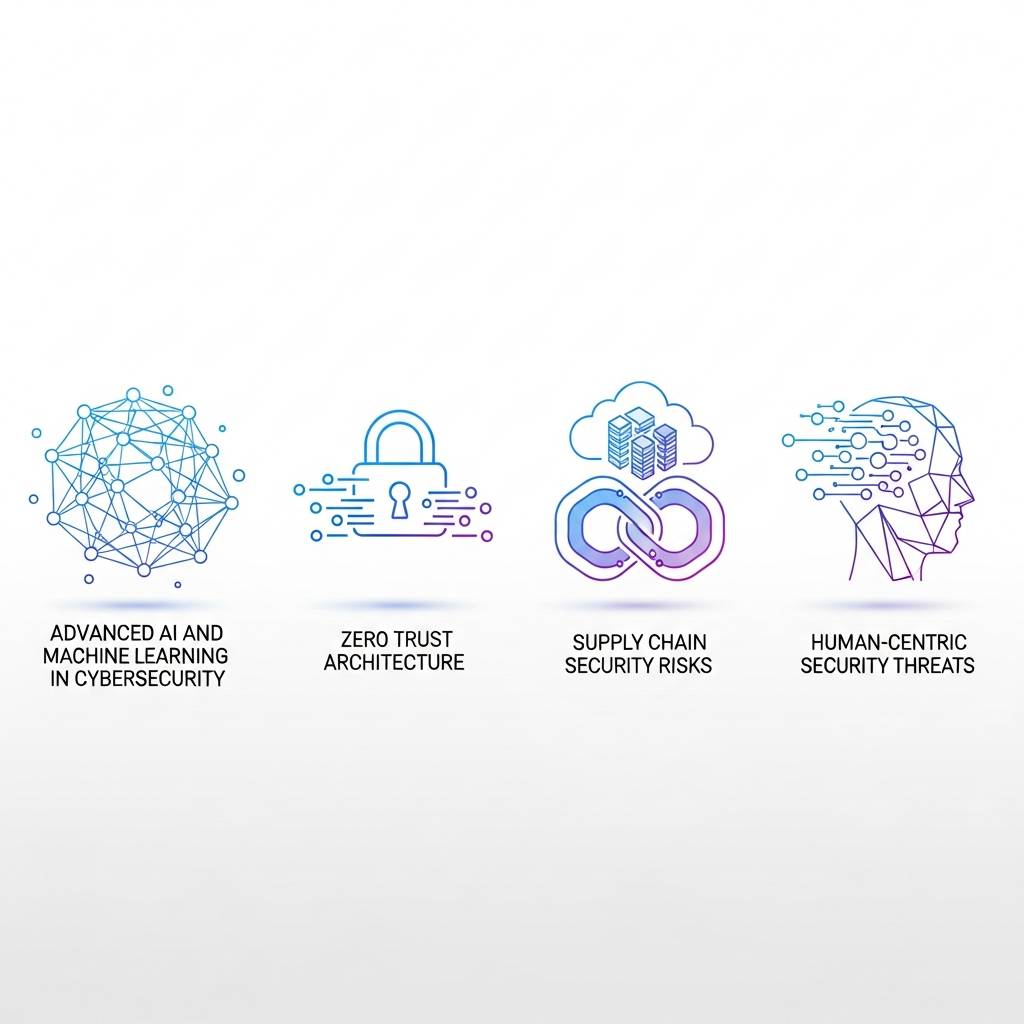
**5 Essential Cyber Trends to Watch Now**
The digital landscape is a dynamic battleground, constantly reshaped by innovation, new threats, and evolving defense strategies. Staying ahead requires a keen understanding of the most impactful shifts. In this rapidly changing environment, recognizing and adapting to the latest **Cyber Trends** is not just an advantage—it’s a necessity for survival. From sophisticated artificial intelligence to the pervasive reach of IoT, the challenges and opportunities in cybersecurity are escalating. This post will delve into five essential **Cyber Trends** that every organization and individual needs to monitor closely to fortify their defenses and navigate the complexities of the modern digital world. Understanding these shifts will empower you to build a more resilient and secure future.
The Shifting Landscape of Cyber Trends: An Overview
The digital realm is experiencing an unprecedented rate of transformation, making cybersecurity a perpetual arms race. New technologies emerge daily, bringing with them both incredible potential and novel vulnerabilities. Organizations face increasing pressure from regulatory bodies, evolving threat actors, and a global shortage of skilled cybersecurity professionals. Navigating these complexities demands a proactive approach, grounded in a solid understanding of the prevailing **Cyber Trends**.
Ignoring these critical developments can leave organizations exposed to significant financial losses, reputational damage, and operational disruptions. Conversely, embracing these trends allows for the strategic implementation of advanced defenses and the fostering of a robust security posture. Let’s explore the key **Cyber Trends** shaping the future of digital security.
1. The Ascendance of AI-Powered Threats and Defenses
Artificial intelligence (AI) is no longer a futuristic concept; it’s a present-day reality profoundly impacting cybersecurity. Its dual nature means AI is a powerful tool for both attackers and defenders, creating a complex new dimension in the ongoing struggle. The sophistication of AI models allows for an unprecedented level of automation and personalization in attacks.
AI’s Dual Role in Emerging Cyber Trends
On the offensive side, AI is enabling threat actors to craft more convincing phishing emails, generate polymorphic malware that evades traditional detection, and even automate reconnaissance. Deepfake technology, powered by AI, can be used to impersonate executives or create convincing fake videos for disinformation campaigns, making social engineering attacks incredibly difficult to spot. This evolution in attack vectors represents a significant shift in **Cyber Trends**, demanding more adaptive defenses.
Conversely, AI is also revolutionizing defensive strategies. Machine learning algorithms can analyze vast datasets to detect anomalies, predict potential threats, and automate incident response. AI-driven security tools can identify sophisticated malware signatures, flag suspicious user behavior, and even orchestrate automated patching, significantly reducing response times. Organizations are increasingly investing in AI-powered Security Operations Centers (SOCs) to handle the sheer volume of alerts and provide predictive threat intelligence. This arms race between offensive and defensive AI is a defining characteristic of current **Cyber Trends**. Keeping pace with these developments is crucial for maintaining a strong security posture.

2. The Expanding Attack Surface of IoT and OT
The proliferation of Internet of Things (IoT) devices and the increasing connectivity of Operational Technology (OT) systems have dramatically expanded the potential attack surface for cybercriminals. From smart home devices to industrial control systems, these interconnected technologies often lack robust security features, making them prime targets. Securing these environments is one of the most pressing **Cyber Trends**.
Securing Connected Devices: A Key Cyber Trend
IoT devices, such as smart cameras, sensors, and wearables, are often deployed without adequate security considerations. Many come with default credentials, unpatched vulnerabilities, and limited update mechanisms, making them easy entry points for attackers. A compromised smart device can provide a foothold into a home network, or worse, an enterprise network if not properly segmented. The sheer volume and diversity of these devices make managing their security a monumental task, highlighting a critical area within **Cyber Trends**.
Operational Technology (OT) systems, which control critical infrastructure like power grids, water treatment plants, and manufacturing facilities, present an even graver concern. A successful attack on OT can lead to physical damage, environmental disasters, and widespread service disruptions. The convergence of IT and OT networks, while offering efficiency benefits, also introduces new pathways for cyberattacks. Protecting these vital systems from sophisticated threats is paramount, and understanding the specific vulnerabilities of IoT and OT is a key aspect of navigating current **Cyber Trends**. Organizations must implement stringent segmentation, continuous monitoring, and specialized OT security solutions. For more insights on securing industrial environments, consider exploring resources from organizations like CISA.

3. The Persistence and Evolution of Ransomware
Ransomware continues to be one of the most pervasive and damaging **Cyber Trends**, evolving in sophistication and impact. What began as simple file encryption has transformed into a multi-faceted extortion scheme, threatening businesses of all sizes and even critical infrastructure. The financial and operational toll of ransomware attacks is staggering, forcing organizations to rethink their entire security strategy.
Ransomware as a Dominant Cyber Trend
Modern ransomware attacks often involve “double extortion,” where attackers not only encrypt data but also exfiltrate it. If the victim refuses to pay the ransom for decryption, the attackers threaten to publish the stolen sensitive information. This adds immense pressure, as organizations face not just data loss but also potential regulatory fines and severe reputational damage. Some groups have even escalated to “triple extortion,” involving DDoS attacks or direct communication with customers and partners to pressure the victim. This aggressive tactic underscores the severity of current **Cyber Trends**.
Ransomware-as-a-Service (RaaS) models have lowered the barrier to entry for aspiring cybercriminals, making these attacks more frequent and widespread. Furthermore, ransomware groups are increasingly targeting supply chains, compromising one vendor to gain access to multiple downstream customers. This amplification effect makes supply chain security an even more critical component of mitigating ransomware risks. Companies must implement robust backup strategies, incident response plans, and strong endpoint detection and response (EDR) solutions. Regular security awareness training for employees is also vital, as phishing remains a primary vector for ransomware delivery. According to reports like the Verizon Data Breach Investigations Report, human error often plays a significant role in successful breaches, highlighting the need for continuous vigilance against these persistent **Cyber Trends**.

4. The Imperative of Zero Trust Architecture
In an increasingly complex and hostile threat landscape, traditional perimeter-based security models are proving insufficient. The rise of remote work, cloud adoption, and the expanding attack surface necessitate a fundamental shift in security philosophy. This shift is embodied by the Zero Trust architecture, which has emerged as a cornerstone of modern **Cyber Trends**.
Adopting Zero Trust: A Critical Cyber Trend for Modern Defense
The core principle of Zero Trust is “never trust, always verify.” Unlike traditional models that assume everything inside the network perimeter is safe, Zero Trust mandates strict verification for every user and device attempting to access resources, regardless of their location. This means that even authenticated users are continuously monitored and re-verified. This proactive stance is essential when considering current **Cyber Trends**.
Implementing Zero Trust involves several key components: micro-segmentation, which isolates workloads and data; strong multi-factor authentication (MFA) for all access attempts; and continuous monitoring and validation of user and device trust levels. This approach significantly reduces the impact of a breach, as even if an attacker gains access to one part of the network, their lateral movement is severely restricted. For organizations grappling with hybrid work environments and cloud migrations, adopting Zero Trust is not merely an option but a strategic imperative. It’s a proactive defense mechanism against the sophisticated threats defining current **Cyber Trends**. Exploring guidelines from authoritative sources like NIST on Zero Trust Architecture can provide a solid foundation for implementation.

5. The Growing Focus on Data Privacy and Regulatory Compliance
With data becoming the new oil, the protection of personal and sensitive information has moved to the forefront of global concerns. This has led to a surge in data privacy regulations worldwide, making compliance a significant and ongoing challenge for organizations. Navigating this intricate web of rules is a crucial aspect of current **Cyber Trends**.
Navigating Data Privacy: An Unavoidable Cyber Trend
Regulations like the General Data Protection Regulation (GDPR) in Europe, the California Consumer Privacy Act (CCPA), and numerous other regional and sector-specific laws dictate how organizations collect, process, store, and share personal data. These regulations often come with stringent requirements for data residency, consent management, breach notification, and individuals’ rights over their data. Non-compliance can result in hefty fines, reputational damage, and loss of customer trust. This growing regulatory burden is a defining element of contemporary **Cyber Trends**.
Beyond legal compliance, there’s a growing ethical imperative to handle data responsibly. Consumers are increasingly aware of their privacy rights and are more likely to engage with organizations that demonstrate a strong commitment to data protection. Implementing robust data governance frameworks, conducting regular privacy impact assessments, and ensuring transparent data handling practices are no longer optional. Organizations must prioritize building privacy by design into their systems and processes. Staying informed about evolving global privacy laws and best practices is paramount for any business operating digitally, making data privacy a critical component of understanding modern **Cyber Trends**. Resources from organizations like the International Association of Privacy Professionals (IAPP) can be invaluable for staying current.

Conclusion
The digital landscape is in a constant state of flux, presenting both formidable challenges and innovative solutions. The five essential **Cyber Trends** we’ve explored—the rise of AI-powered threats and defenses, the expanding attack surface of IoT and OT, the persistence of ransomware, the imperative of Zero Trust, and the growing focus on data privacy—underscore the complexity and urgency of modern cybersecurity. Each of these **Cyber Trends** demands a strategic and proactive response from organizations determined to protect their assets, maintain trust, and ensure business continuity.
Staying informed, investing in cutting-edge technologies, fostering a strong security culture, and continually adapting defense mechanisms are no longer optional but fundamental requirements. By understanding and strategically addressing these critical **Cyber Trends**, organizations can build more resilient defenses and navigate the future with greater confidence. Don’t wait for a breach to act; proactively assess your security posture, implement the necessary safeguards, and consider engaging with cybersecurity experts to fortify your defenses against these evolving threats. The future of your digital security depends on how well you respond to these essential **Cyber Trends** today.