







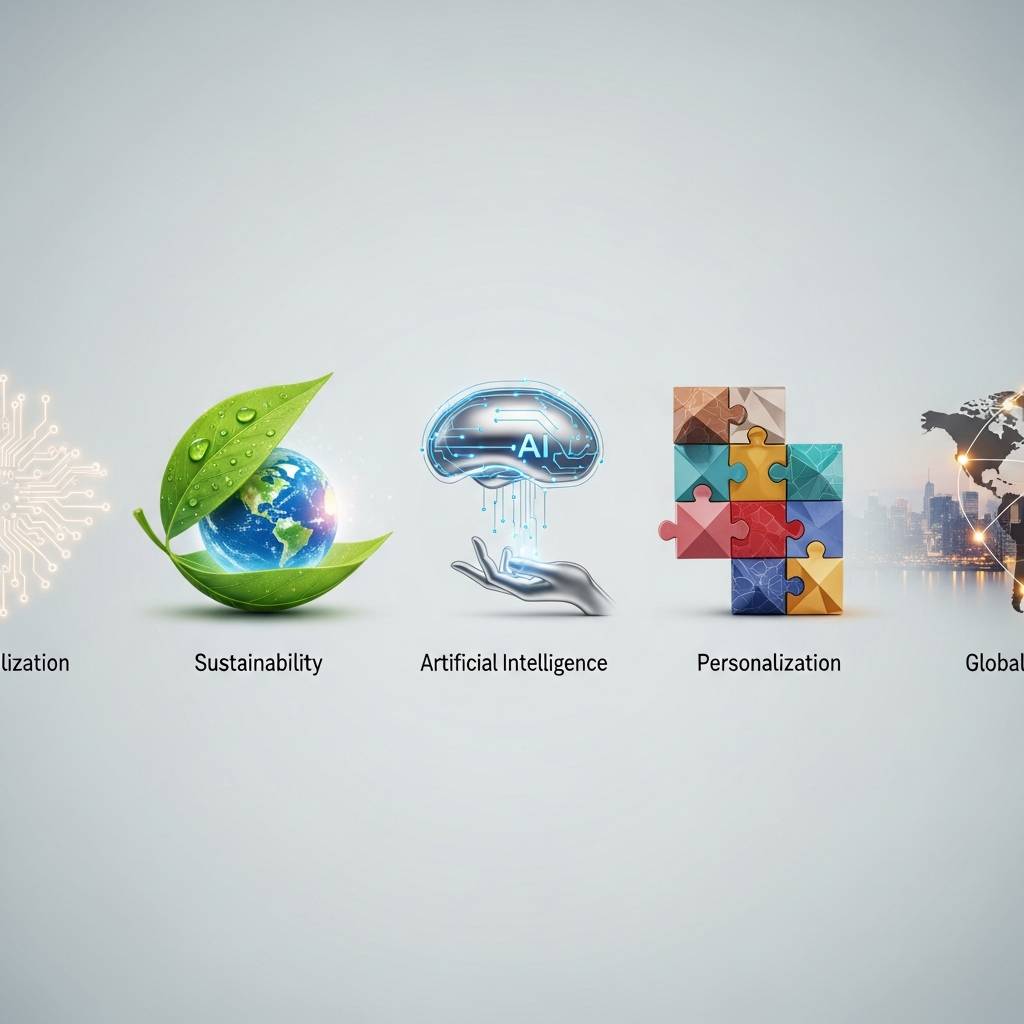
The business landscape is in a constant state of flux, shaped by rapid technological advancements, evolving consumer behaviors, and global shifts. For any organization aiming for sustained success, understanding and adapting to these changes is not just an advantage—it’s a necessity. Identifying the most impactful Growth Trends is paramount for strategic planning and future-proofing your enterprise. These trends act as powerful indicators, guiding investments, innovation, and operational adjustments to ensure relevance and competitive edge in an increasingly dynamic market.
Navigating the Future with Key Growth Trends
In a world where yesterday’s best practices can quickly become obsolete, staying ahead requires foresight. Businesses that proactively embrace emerging Growth Trends are better positioned to innovate, capture new markets, and build resilient operational models. Ignoring these shifts, conversely, can lead to stagnation and a loss of market share. This article delves into five essential growth trends that are currently reshaping industries and will continue to drive success for years to come.
By understanding these pivotal shifts, leaders and entrepreneurs can make informed decisions, allocate resources effectively, and cultivate a culture of continuous adaptation. Let’s explore the fundamental growth trends that will define tomorrow’s successful businesses.
1. The Ascent of AI and Automation in Growth Trends
Artificial Intelligence (AI) and automation are no longer futuristic concepts; they are integral components of modern business strategy and undeniable Growth Trends. From streamlining operations to enhancing customer experiences, AI’s applications are vast and varied. It empowers businesses to process vast amounts of data, identify patterns, and make predictive analyses with unprecedented accuracy.
Consider the impact on efficiency: automated workflows reduce manual errors and free up human capital for more complex, creative tasks. In customer service, AI-powered chatbots provide instant support, improving response times and satisfaction. For instance, companies leveraging AI for predictive analytics can anticipate market demands, optimize inventory, and personalize marketing campaigns, leading to significant revenue growth. According to a recent report by PwC, AI could contribute up to $15.7 trillion to the global economy by 2030, underscoring its immense potential as a core growth driver.
Businesses that invest in AI and automation tools are seeing tangible benefits, from increased productivity to enhanced decision-making capabilities. Embracing these technologies is not just about cost-cutting; it’s about unlocking new avenues for innovation and competitive differentiation. Implementing robust AI strategies is essential for any forward-looking organization, linking directly to broader digital transformation efforts.
Image alt text: Understanding Growth Trends driven by AI and Automation
2. Sustainability and ESG as Core Growth Trends
Environmental, Social, and Governance (ESG) factors have transcended mere corporate social responsibility to become fundamental Growth Trends. Consumers, investors, and regulators are increasingly prioritizing sustainability, pushing businesses to adopt more ethical and environmentally friendly practices. This shift isn’t just about compliance; it’s about building long-term value and brand loyalty.
Companies that embed sustainability into their core operations often experience enhanced brand reputation, reduced operational costs through efficiency, and improved access to capital from ESG-focused investors. Examples include adopting renewable energy sources, implementing circular economy models to minimize waste, and ensuring ethical supply chains. A study by NielsenIQ found that 78% of US consumers say a sustainable lifestyle is important to them, and they are willing to pay more for sustainable products.
Moreover, robust ESG performance can mitigate risks, such as regulatory fines or reputational damage, while also attracting top talent who seek purpose-driven organizations. The World Economic Forum consistently highlights sustainability as a critical factor for future economic stability and growth. Businesses recognizing sustainability as a strategic imperative are not just doing good; they are positioning themselves for resilient and impactful growth.
3. Hyper-Personalization and Customer Experience Growth Trends
In today’s crowded marketplace, a one-size-fits-all approach no longer suffices. Hyper-personalization, driven by advanced data analytics and AI, is one of the most significant Growth Trends defining customer engagement. It involves tailoring products, services, and communications to individual customer preferences, behaviors, and needs, often in real-time.
This goes beyond basic segmentation; it’s about creating a truly unique and intuitive customer journey. Think of streaming services recommending content based on your viewing history, or e-commerce sites suggesting products you might like based on past purchases and browsing patterns. The goal is to make every interaction feel bespoke, relevant, and valuable. Companies like Amazon and Netflix have set high benchmarks in this area, demonstrating the power of personalization in driving loyalty and repeat business.
The benefits are clear: increased customer satisfaction, higher conversion rates, and stronger brand loyalty. A report by Epsilon indicated that 80% of consumers are more likely to make a purchase from a brand that provides personalized experiences. Investing in technologies that enable deep customer insights and personalized interactions is crucial for improving customer retention strategies and fostering long-term relationships. This focus on individual customer journeys is a non-negotiable aspect of modern growth trends.
4. The Gig Economy and Future of Work Growth Trends
The traditional employment model is undergoing a profound transformation, with the rise of the gig economy and flexible work arrangements emerging as dominant Growth Trends. This shift is driven by a desire for flexibility from workers and a need for agility and specialized skills from businesses. Companies are increasingly leveraging independent contractors, freelancers, and project-based workers to meet specific demands without the overhead of permanent hires.
The gig economy offers businesses access to a diverse global talent pool, allowing them to scale operations up or down quickly in response to market fluctuations. It also fosters innovation by bringing in fresh perspectives and specialized expertise on demand. This trend encompasses not just individual freelancers but also the broader adoption of remote work, hybrid models, and flexible schedules, all contributing to a more dynamic and adaptable workforce.
Platforms connecting businesses with gig workers have seen exponential growth, demonstrating the viability and popularity of this model. Gartner research consistently highlights the importance of workforce flexibility in future-proofing organizations. Adapting to these new ways of working requires rethinking talent acquisition, management, and company culture. Businesses that embrace the gig economy and flexible work models can enhance their operational efficiency, reduce costs, and gain a significant competitive advantage in talent acquisition, making it a critical aspect of current growth trends.
5. Data-Driven Decision Making and Analytics Growth Trends
In the digital age, data is often called the new oil, and its effective utilization is unquestionably one of the most powerful Growth Trends. Companies that harness the power of data analytics to inform their decisions gain a significant edge over competitors relying on intuition alone. Data-driven decision making involves collecting, analyzing, and interpreting vast amounts of data to uncover insights, predict outcomes, and optimize strategies across all business functions.
From marketing campaigns to operational efficiency and product development, analytics provides the clarity needed to make informed choices. For example, A/B testing can precisely determine which website design leads to higher conversion rates, while sales data can identify regional market opportunities or underperforming product lines. Real-time dashboards provide immediate insights, allowing for quick adjustments to strategy. McKinsey & Company emphasizes that data-driven organizations are 23 times more likely to acquire customers, six times as likely to retain customers, and 19 times as likely to be profitable.
Investing in robust data infrastructure, analytics tools, and skilled data scientists is no longer optional. It’s fundamental for understanding market dynamics, customer behavior, and internal performance. Integrating business intelligence tools and fostering a data-first culture empowers every department to contribute to strategic growth. This systematic approach to leveraging information is a defining characteristic of successful companies navigating complex growth trends.
Capitalizing on Emerging Growth Trends for Strategic Advantage
The five essential Growth Trends—AI and automation, sustainability, hyper-personalization, the gig economy, and data-driven decision making—are not isolated phenomena. They are interconnected forces that collectively shape the future of business. Businesses that recognize these interdependencies and integrate these trends into a cohesive strategy will be best positioned for long-term success.
Embracing these trends requires more than just technological adoption; it demands a shift in mindset, a commitment to continuous learning, and an agile approach to strategy. Organizations must foster cultures that encourage experimentation, adaptability, and a proactive stance toward change. Those that can effectively blend innovation with responsible practices, while keeping the customer at the core, will thrive.
The journey to future success is paved with informed decisions and strategic adaptations. By diligently monitoring and responding to these essential Growth Trends, businesses can not only survive but truly flourish in the evolving global marketplace. It’s about being prepared, being proactive, and being persistent in the pursuit of sustainable growth.
The time to act is now. Start evaluating how these Growth Trends impact your strategy today and begin charting your course for future success!