







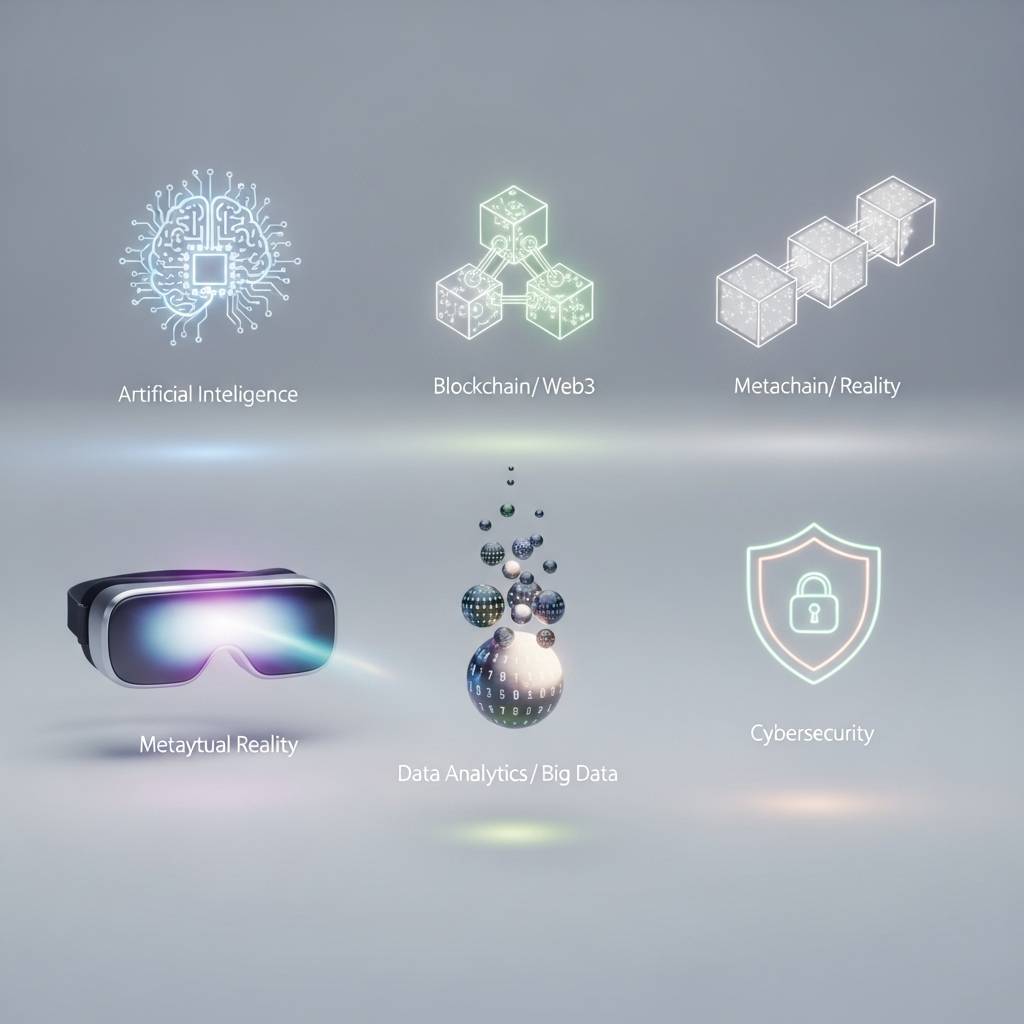
The pace of technological advancement is breathtaking, constantly reshaping industries, economies, and daily life. To stay competitive and relevant, individuals and businesses alike must not only observe but actively understand and adapt to the most impactful shifts. This requires a keen eye on emerging technological shifts and a strategic approach to integration. Ignoring these changes can lead to stagnation, while embracing them opens doors to unprecedented opportunities. Understanding key Digital Trends is no longer optional; it is fundamental for future success.
In a world where innovation happens at lightning speed, identifying the core drivers of change is paramount. From artificial intelligence transforming workflows to immersive realities redefining interaction, these trends are not just fleeting fads. They represent foundational shifts that will continue to evolve and influence our digital landscape for years to come. This post delves into five essential Digital Trends that are poised to shape the future, offering insights into their implications and how you can prepare.
The Evolving Landscape of Digital Trends
The digital world is a dynamic ecosystem, continuously evolving with new technologies, consumer behaviors, and market demands. Businesses and professionals must develop a forward-thinking mindset to navigate this complexity effectively. Staying ahead means not just reacting to changes but proactively anticipating them and integrating them into strategic planning. These overarching Digital Trends are intertwined, often influencing and accelerating each other, creating a complex web of innovation that demands careful attention.
From the smallest startups to multinational corporations, the imperative to innovate and adapt is universal. The companies that thrive are those that invest in understanding these shifts, experimenting with new tools, and fostering a culture of continuous learning. Each of the following trends represents a significant area of growth and disruption, offering both challenges and immense potential for those prepared to embrace them.
1. Artificial Intelligence (AI) and Machine Learning (ML)
Artificial Intelligence (AI) and Machine Learning (ML) have moved beyond the realm of science fiction and are now integral to countless applications, from personalized recommendations to advanced diagnostics. These technologies enable systems to learn from data, identify patterns, and make decisions with minimal human intervention. Their impact is profound, driving efficiency, innovation, and entirely new capabilities across virtually every sector.
The continuous advancements in AI, particularly in areas like deep learning and natural language processing, are unlocking capabilities that were once unimaginable. Businesses are leveraging AI to automate repetitive tasks, analyze vast datasets for actionable insights, and enhance customer experiences. This trend is not just about automation; it’s about augmenting human capabilities and creating more intelligent systems that can adapt and evolve.
The Rise of Generative AI and Automation in Digital Trends
A particularly exciting development within AI is the emergence of Generative AI. Tools like ChatGPT, DALL-E, and Midjourney are revolutionizing content creation, design, and even software development. These models can generate human-like text, create stunning images from descriptions, and even write code, dramatically speeding up creative and technical processes. This capability is a game-changer for marketing, product development, and customer service.
The implications for business efficiency are staggering. Companies can automate content generation for blogs, social media, and marketing campaigns, freeing up human talent for more strategic and creative endeavors. In customer service, AI-powered chatbots are becoming increasingly sophisticated, handling complex queries and providing instant support. According to a report by PwC, AI could contribute up to $15.7 trillion to the global economy by 2030, highlighting its immense potential. Embracing these Digital Trends in AI is crucial for maintaining a competitive edge.
Examples of AI in action include Netflix’s recommendation engine, which uses ML to suggest content based on viewing history, and predictive analytics tools that help businesses forecast sales or identify potential risks. As AI continues to mature, its integration into everyday business operations will become even more seamless and indispensable. Companies exploring AI implementation guides are already seeing significant returns.
2. Immersive Experiences: Metaverse, AR, and VR
Immersive technologies, encompassing Virtual Reality (VR), Augmented Reality (AR), and the nascent Metaverse, are set to redefine how we interact with digital content and each other. These technologies blur the lines between the physical and digital worlds, offering experiences that are more engaging, intuitive, and interactive than ever before. The potential applications span entertainment, education, training, and commerce.
VR completely immerses users in a simulated environment, often requiring a headset, while AR overlays digital information onto the real world, typically via smartphone apps or smart glasses. The Metaverse, still largely conceptual, aims to be a persistent, interconnected network of 3D virtual worlds where users can socialize, work, play, and transact. These technologies represent a significant leap in how we consume and create digital experiences.
Navigating New Realities: Key Digital Trends
The Metaverse, in particular, is one of the most talked-about Digital Trends, promising a future where digital interactions are as rich and meaningful as real-world ones. While still in its early stages, major tech companies are investing billions in building its foundational infrastructure and applications. This includes everything from virtual concerts and events to digital marketplaces for NFTs and virtual real estate.
AR and VR are already making tangible impacts across various industries. In retail, AR apps allow customers to virtually “try on” clothes or place furniture in their homes before purchasing. In healthcare, VR is used for surgical training, pain management, and therapy. Education benefits from immersive learning environments that make complex subjects more engaging. Statista projects the global AR and VR market to reach over $250 billion by 2028, underscoring the rapid adoption and growth of these immersive technologies. Understanding these Digital Trends is crucial for future engagement strategies.
Beyond entertainment, these technologies offer powerful tools for collaboration and productivity. Remote teams can meet in virtual spaces, fostering a sense of presence and engagement that traditional video conferencing often lacks. As hardware becomes more affordable and sophisticated, the adoption of AR and VR will accelerate, opening up new avenues for businesses to connect with customers and employees. Companies should explore Gartner’s insights on the Metaverse to stay informed.
3. Hyper-Personalization and Data-Driven Strategies
In an increasingly crowded digital landscape, generic messaging no longer cuts through the noise. Consumers expect experiences that are tailored to their individual preferences, behaviors, and needs. This demand fuels the rise of hyper-personalization, a strategy that leverages vast amounts of data and advanced analytics to deliver highly relevant and timely interactions. This is one of the most critical Digital Trends for customer engagement.
Hyper-personalization goes beyond simple segmentation; it aims to treat each customer as an individual. This involves collecting and analyzing data from various touchpoints – website visits, purchase history, social media interactions, and more – to build a comprehensive profile of each user. AI and machine learning play a pivotal role in processing this data, identifying patterns, and predicting future behavior to deliver truly individualized experiences.
Leveraging Data for Personalized Digital Trends
The benefits of hyper-personalization are substantial, leading to increased customer satisfaction, higher conversion rates, and stronger brand loyalty. When customers feel understood and valued, they are more likely to engage with a brand and make repeat purchases. This approach transforms the customer journey from a generic path to a bespoke experience, tailored to their unique needs and preferences at every step.
Examples abound: e-commerce sites like Amazon use past purchases and browsing history to recommend products; streaming services like Spotify curate personalized playlists; and email marketing campaigns deliver content based on user interests and engagement. According to Accenture, 91% of consumers are more likely to shop with brands that provide relevant offers and recommendations. This statistic underscores the power of data-driven personalization as a key among current Digital Trends. Businesses must prioritize robust data governance and analytics to fully capitalize on this trend, ensuring they also adhere to data privacy best practices.
Implementing effective hyper-personalization requires sophisticated data infrastructure, powerful analytics tools, and a deep understanding of customer psychology. It also necessitates a commitment to data privacy and transparency, as consumers are increasingly concerned about how their personal information is used. Ethical data practices are paramount to building and maintaining customer trust in this data-rich environment.
4. Decentralized Technologies: Blockchain and Web3
Decentralized technologies, primarily blockchain, are ushering in a new era of digital trust, transparency, and ownership. Blockchain, the underlying technology behind cryptocurrencies like Bitcoin and Ethereum, is a distributed ledger system that records transactions in a secure, immutable, and transparent manner. Its potential extends far beyond digital currencies, promising to disrupt various industries by removing the need for central intermediaries.
Web3 is the vision of a decentralized internet built on blockchain technology, where users have greater control over their data, identity, and digital assets. This shift contrasts sharply with Web2, where large tech companies often control user data and platforms. Web3 aims to empower individuals, fostering a more open, secure, and user-centric digital environment. These are transformative Digital Trends that will redefine digital interactions.
Understanding Blockchain’s Impact on Digital Trends
Blockchain’s core appeal lies in its ability to create trust in a trustless environment. By distributing transaction records across a network of computers, it makes it extremely difficult for any single party to alter or tamper with data. This makes it ideal for applications requiring high levels of security and transparency, such as supply chain management, digital identity verification, and intellectual property rights.
Beyond cryptocurrencies and NFTs (Non-Fungible Tokens) – which represent unique digital assets on a blockchain – Web3 is fostering new models of ownership and governance. Decentralized Autonomous Organizations (DAOs) allow communities to collectively manage projects and resources, while decentralized finance (DeFi) offers peer-to-peer financial services without traditional banks. The World Economic Forum highlights blockchain as a critical technology for future economic growth. Businesses exploring these Digital Trends will find new opportunities for efficiency, security, and customer engagement. For a deeper dive, consider resources from CoinDesk on Web3.
While still facing challenges like scalability and regulatory uncertainty, the long-term potential of blockchain and Web3 is undeniable. Companies are already experimenting with blockchain for secure data sharing, transparent voting systems, and creating new digital economies. Adopting these technologies requires a fundamental rethinking of traditional business models and a commitment to decentralized principles.
5. Cybersecurity and Digital Trust
As our lives become increasingly digital, the importance of cybersecurity and maintaining digital trust has never been greater. The sophistication and frequency of cyberattacks are constantly rising, posing significant threats to individuals, businesses, and national infrastructure. Protecting sensitive data, ensuring system integrity, and maintaining user privacy are paramount concerns in the current digital landscape.
Cybersecurity is no longer just an IT department concern; it’s a fundamental business imperative that impacts reputation, financial stability, and regulatory compliance. With the proliferation of connected devices (IoT), cloud computing, and remote work, the attack surface for cybercriminals has expanded dramatically, necessitating robust and proactive security measures. These ongoing Digital Trends demand constant vigilance and innovation in security protocols.
Building Trust in the Age of Evolving Digital Trends
Building digital trust involves not only implementing strong technical safeguards but also fostering transparency and ethical data practices. Consumers are increasingly aware of data breaches and privacy concerns, making trust a key differentiator for businesses. Companies that demonstrate a strong commitment to protecting user data and respecting privacy will gain a significant competitive advantage.
Key cybersecurity Digital Trends include the adoption of AI-powered security solutions that can detect and respond to threats in real-time, the implementation of zero-trust architectures where no user or device is inherently trusted, and a greater focus on data governance and compliance with regulations like GDPR and CCPA. According to IBM, the average cost of a data breach reached $4.35 million in 2022, emphasizing the financial imperative of robust cybersecurity. Investing in comprehensive cybersecurity strategies and fostering a culture of security awareness are essential for navigating the complex digital future. Organizations should regularly review their cybersecurity best practices.
Furthermore, the human element remains a critical factor in cybersecurity. Employee training, strong password policies, and a cautious approach to phishing attempts are as important as any technological solution. Businesses must adopt a multi-layered security approach, combining technology, processes, and people to build resilient defenses against evolving cyber threats and maintain the trust of their stakeholders.
Conclusion
The digital landscape is a vibrant and ever-changing frontier, presenting both immense opportunities and significant challenges. The five essential Digital Trends discussed – Artificial Intelligence, Immersive Experiences, Hyper-Personalization, Decentralized Technologies, and Cybersecurity – are not isolated phenomena. They are interconnected forces driving the next wave of innovation and disruption.
For individuals, understanding these Digital Trends means equipping oneself with future-proof skills and adapting to new ways of working and interacting. For businesses, it means rethinking strategies, investing in new technologies, and fostering a culture of agility and continuous learning. Embracing these shifts is not merely about adopting new tools; it’s about fundamentally transforming how we create value, engage with customers, and secure our digital future. Proactive engagement with these Digital Trends will determine who leads and who lags behind.
Are you ready to embrace these transformative Digital Trends and position yourself or your organization for future success? Start by assessing your current capabilities, identifying areas for growth, and exploring pilot projects for these emerging technologies. The future is digital, and preparedness is key. Contact us today to discuss how your business can strategically integrate these trends and thrive in the evolving digital era!